⏱ 3 min read
Buterin argues advanced models can harden defenses by scaling formal verification across complex systems, as developers deploy AI agents and recent Orchard findings underscore the shift.
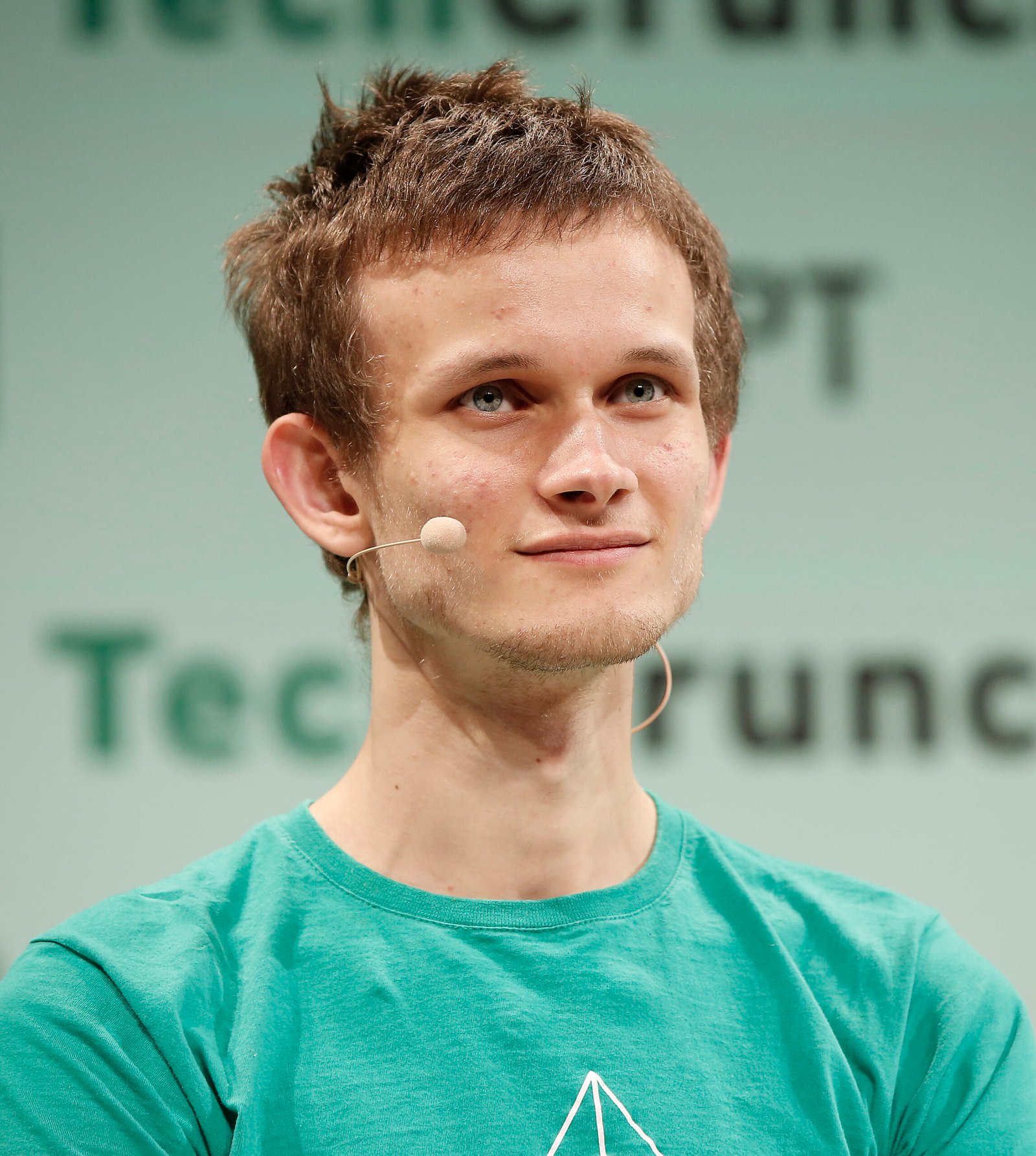
Vitalik Buterin rejected that AI-powered hacking dooms cybersecurity, arguing in a Wednesday X post that advanced models can scale formal verification across entire systems; he added he holds roughly 90% of his net worth in crypto.
Vitalik Buterin on AI Defense
In a Wednesday post on X, Ethereum co-founder Vitalik Buterin wrote, “It’s an increasingly common take that AI hacking means cybersecurity is doomed. I disagree. I think cybersecurity is naturally defense-favoring once people get their shit together.” He contends AI can upgrade defensive capabilities by making rigorous proofs practical even for complex software, shifting security from reactive patching to provable properties. Extending that logic, Buterin stated, “If AI can prove Navier-Stokes and FLT, then AI can prove the statement ‘this program is secure’ as a mathematical theorem,” adding, “Even if the program is very complicated.” The position frames AI as a force multiplier for defenders, provided organizations define their security requirements precisely enough to be proven.
Buterin explicitly aligns incentives with outcomes, noting he holds roughly 90% of his net worth in crypto. The defensive case has recent field evidence: security researcher Taylor Hornby used Anthropic’s Claude Opus 4.8 to uncover a four-year-old flaw in Zcash’s Orchard privacy pool that could have enabled unlimited, undetectable counterfeiting of ZEC; developers found no evidence it was exploited before it was patched in June. The broader context, per the description, is developers deploying AI agents to scan code, test exploits, and verify bugs, with researchers uncovering vulnerabilities in both Ethereum infrastructure and Bitcoin software.
▲ 0.50%
▲ 1.55%
Formal Verification With AI
Buterin’s first-order claim targets the feasibility constraint: formal verification has historically been costly to scale. His argument is that AI can compress the manual burden, making full-system proofs more realistic and bringing mathematically grounded guarantees to components that previously relied on testing alone. That framing converts AI from an attacker’s accelerator into a defender’s accelerator, provided teams translate security goals into properties that tools can prove. He adds a crucial caveat: the difficulty lies in specifying targets. “The hard part is defining what ‘secure’ means in the first place,” he wrote. In practice, success means lifting property definitions from developer lore into explicit statements that provers can attack or validate.
Second-order effects follow. If AI-assisted formal verification matures, engineering focus shifts from exploit-chasing to specification design: writing invariants, partitioning threat models, and encoding assumptions. The description situates this within Ethereum’s push toward AI-assisted security, privacy, STARKs, and quantum resistance, suggesting a convergence between cryptographic assurances and software proofs. That convergence would reduce the surface area for emergent classes of bugs, while increasing the operational premium on specification governance, test coverage for specs themselves, and clarity on what is—and is not—provable.
Zcash, Claude Opus 4.8 Signal
- Track whether formal verification expands from contract-level checks to end-to-end system properties across clients and bridges.
- Monitor post-patch disclosures referencing Orchard or ZEC counterfeit risk to confirm no residual exploit paths remain.
- Watch AI agent adoption in Ethereum infrastructure and Bitcoin software testing pipelines for measurable bug detection deltas.
- Treat repeated exploit themes as specification gaps; prioritize defining “secure” properties module-by-module before implementation.
Ethereum’s AI-Security Push
The immediate catalysts are operational, not theoretical. Developers across the crypto space are deploying AI defensively following several incidents that fueled fears attackers had an AI edge, while research efforts are already uncovering vulnerabilities in Ethereum infrastructure and Bitcoin software. In May, Taylor Hornby’s use of Claude Opus 4.8 to surface the four-year-old Zcash Orchard flaw—patched in June with no evidence of exploitation—shows the defensive arc Buterin describes: AI can scale review and surface critical issues before attackers act. Combined with a public commitment from Buterin on formal verification and his own crypto exposure, the next step is organizational: encode “secure” in specifications tight enough for provers to validate and for teams to ship against consistently.
This content is for informational purposes only and does not constitute financial advice.
🧠 HafidWatch Take
If robust AI-assisted formal verification is repeatedly demonstrated to miss entire classes of exploitable bugs in audited codebases, then the defense-advantaged framing falls apart; in other words, a proof that fails to catch actual vulnerabilities cannot be treated as a practical security guarantee. This would invalidate the notion that AI-driven proofs reliably shift cybersecurity towards provable safety by revealing a fundamental flaw: the formal verification process—even enhanced by AI—cannot compensate for incomplete or incorrect security specifications.
A historical parallel can be drawn with early static analysis tools in software development, which promised to catch all bugs but routinely missed critical pathologies until tool limitations and specification gaps were better understood. Similarly, the consensus underestimates the inherently organizational nature of defining “secure” properties with machine-precise rigor. Without addressing this bottleneck, AI’s scaling power risks amplifying false confidence in security guarantees rather than delivering the defensive leap envisioned.
Daily crypto intelligence. Before the market opens.
Including the Divergence Index — the sentiment gap no other newsletter tracks. Free, every morning at 7:30am ET.
✓ Free forever · ✓ No spam · ✓ 50+ sources monitored