⏱ 3 min read
Kevin Warsh cast this week’s move as removing “a dose of accommodation,” with markets pricing several more hikes and Evercore ISI flagging a hawkish, open‑ended framing for policy.
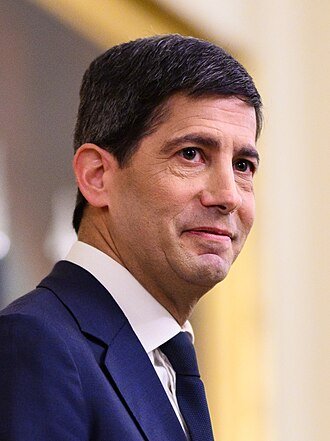
Federal Reserve Chairman Kevin Warsh framed this week’s quarter-point rate increase as removing “a dose of accommodation,” a phrasing that shifts how guidance is read as markets price in several more hikes and debate the guardrails shaping policy decisions.
Warsh’s “Dose of Accommodation”
Warsh described the decision not as classic tightening but as the removal of “a dose of accommodation,” arguing the move was enabled by a U.S. economy that has “strengthened” and by financial conditions that have become less restrictive. At the post‑meeting news conference, he rejected conventional thinking about where the guardrails sit, implicitly sidelining a rigid neutral‑rate anchor in favor of a conditions‑based framing. The emphasis matters: it suggests policy steps will be justified by the presence of residual accommodation, not by distance to a model of neutrality. For traders, the signal calibrates to what conditions permit rather than to a pre‑announced terminal target.
Numerically, the communication centered on a quarter‑point adjustment and the notion that markets are now pricing in several more hikes ahead. That combination defines the near‑term calculus: the unit size of change is small, but the path is potentially extended. The language also retains optionality by calling the step a removal of accommodation, which can scale with conditions without implying a predetermined endpoint. The framing helps explain why the debate is less about whether a single hike is sufficient and more about how many iterations a “dose” logic could entail if strengthening persists.
Evercore ISI Flags Hawkish Framing
Evercore ISI’s Krishna Guha called the phrase “the one stand‑out hawkish element,” noting it was repeated deliberately and signals a more open‑ended approach to the number of hikes that might be required. That reading aligns with the market’s repricing toward several additional moves: if officials see policy as withdrawing accommodation rather than striking neutrality, the distribution of outcomes naturally shifts to a wider, higher‑for‑longer range. The immediate first‑order effect is forward‑rate uncertainty; traders must infer the stopping condition from evolving economic strength and the tightness of financial conditions, not from a static reference point.
The second‑order effect is communication asymmetry. A “dose” construct compels markets to monitor qualitative language as closely as the increment size. If officials maintain that financial conditions are “less restrictive,” the bar for pausing rises because residual accommodation is, by definition, not fully withdrawn. Conversely, if conditions re‑tighten or momentum in “strengthened” activity eases, the same framework permits a quick pivot without contradicting prior guidance. This elasticity widens the scenario tree and raises the premium on reading incremental phrase changes in real time.
Neutral Rate and Guidance Signals
- Watch whether references to the “neutral rate” re‑emerge; explicit anchoring would compress the path’s open‑ended tail.
- Track if “dose of accommodation” is repeated in speeches; persistence would validate Evercore ISI’s hawkish interpretation.
- Gauge whether markets keep pricing “several more” hikes; a retracement would signal fading conviction in the path.
- Map language on “less restrictive” conditions; a reversal would lower the hurdle for a pause without policy back‑tracking.
Warsh, Markets, and Catalysts
Concrete catalysts now revolve around guidance clarity rather than calendar dates. Additional Warsh remarks and policy statements will show whether “dose” framing persists, whether the neutral‑rate yardstick is restored, or whether officials lean more heavily on the “strengthened” economy and financial‑conditions channel. The next inflection in market pricing hinges on which of those signals dominates. If repetition of the phrase continues alongside references to conditions being “less restrictive,” the market’s bias toward several more hikes remains coherent. If officials instead emphasize the sufficiency of the recent adjustment or explicitly frame the move as “tightening,” the tail of additional hikes shortens quickly.
This content is for informational purposes only and does not constitute financial advice.
🧠 HafidWatch Take
If subsequent policy communications explicitly re-anchor guidance to a neutral-rate benchmark and characterize future adjustments as classic tightening rather than accommodation removal, then this framing is incorrect because it reveals that the “dose of accommodation” language was not a durable, hawkish signal but a temporary rhetorical device. Such an observation would demonstrate that the current interpretation overemphasizes phrasing at the expense of the underlying policy stance, thus invalidating the article’s premise that ongoing hikes are justified by residual accommodation rather than a return to neutral settings.
Historically, the 1994 Fed tightening cycle saw initial communications minimizing the pace and depth of rate increases, only for markets to rapidly adjust once clarity emerged on the Fed’s true intent. Unlike now, where conditions-based signaling prevails, that episode showed how markets can be blindsided by shifts between accommodation removal and overt tightening. This precedent suggests that the current “dose” narrative may be an early-stage communication tactic rather than a fixed framework guiding a multi-hike path.
Daily crypto intelligence. Before the market opens.
Including the Divergence Index — the sentiment gap no other newsletter tracks. Free, every morning at 7:30am ET.
✓ Free forever · ✓ No spam · ✓ 50+ sources monitored